MYKA
"An everchanging social hub connecting brands and consumers"
MYKA is a physical solution with digital components for creating positive social interactions and encouraging inclusivity between groups of communities within shopping malls. MYKA is a mystery cart that travels from mall to mall, collaborating with different brands to bring a fresh shopping experience. It provides unique collaborations and rewards users for their existing shopping routine.
MYKA encourages more social activities within malls in a way that gives back to the community, by making malls a place worth spending time in for everyone, fostering a socializing hub for consumers.
Type
UX Case Study
Structure
Team of 3
Duration
March - June 2023 (3 months)
Role
UX Researcher, Lead User Testing, Visual Designer and 3D Modeller
Tools
Figma, Canva, Miro
Subject
DECO2014 User Experience Design Studio @ USYD

Outline of the problem
Shopping malls today lack the necessary social activities and aesthetic appeal needed to make them a socializing hub in consumer’s eyes. As shopping malls take up large areas of space which were once public, it is important to build them in a way that gives back to the community by making them places worth spending time in.
Design Process

Problem Statement
To explore how shopping malls can encourage inclusivity between groups of communities and how malls can be discouraging towards social interactions.
Background Research
Within our initial background research, we had found existing studies that focused on shopping malls which explored how shopping malls can encourage inclusivity between groups of communities and how they can be discouraging towards social interactions. With these studies, three background research key findings was able to be identified:
Multiple research studies have found that shopping mall create an exclusionary environment for shoppers.
People enjoy spending time in green spaces so long as they are accessible. Green spaces have also been found to have a positive impact on people's mental health.
Through enough research and work, multiple articles highlight that malls have the ability to foster social interaction even though participants don't seem to believe they do at this stage.
Primary Research
Overview
To further provide a foundation for our research, two research questions were formulated:
1. What improvements do participants desire in order to make malls more appealing to them?
2. What are the characteristics and features of malls that participants find most appealing?
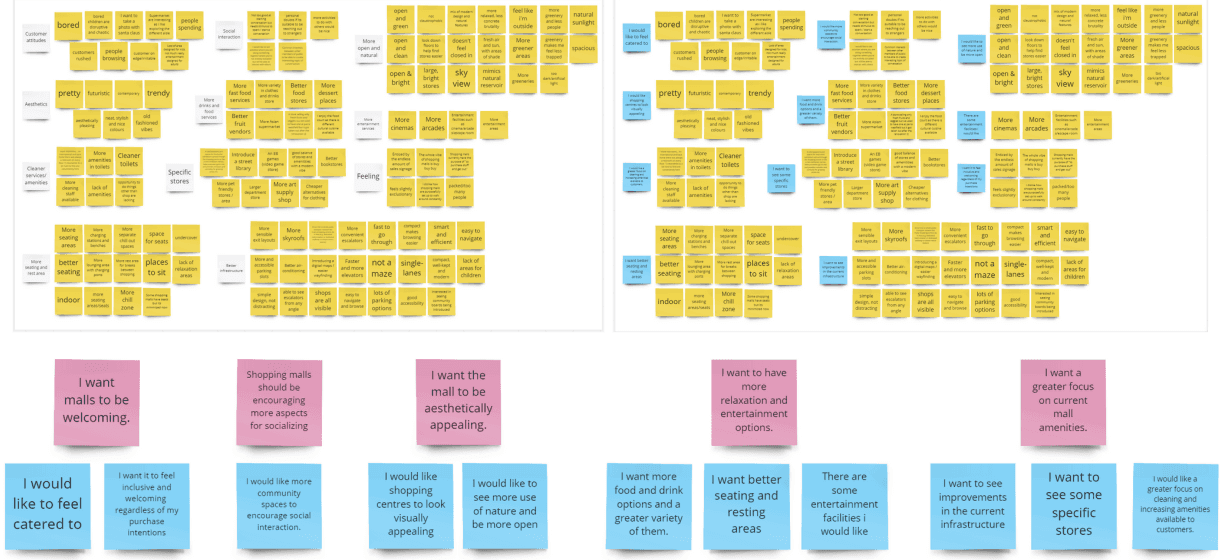
Using both background research key findings and research questions as a basis for our primary research, methods such as surveys, field study and interviews were conducted. After extensive analysis through affinity diagram, empathy map, and persona, 5 key pain points were identified:
I want malls to be welcoming
Shopping malls should be encouraging more aspects for socialising
I want the mall to be aesthetically appealing
I want to have more relaxation and entertainment options
I want a greater focus on current mall amenities
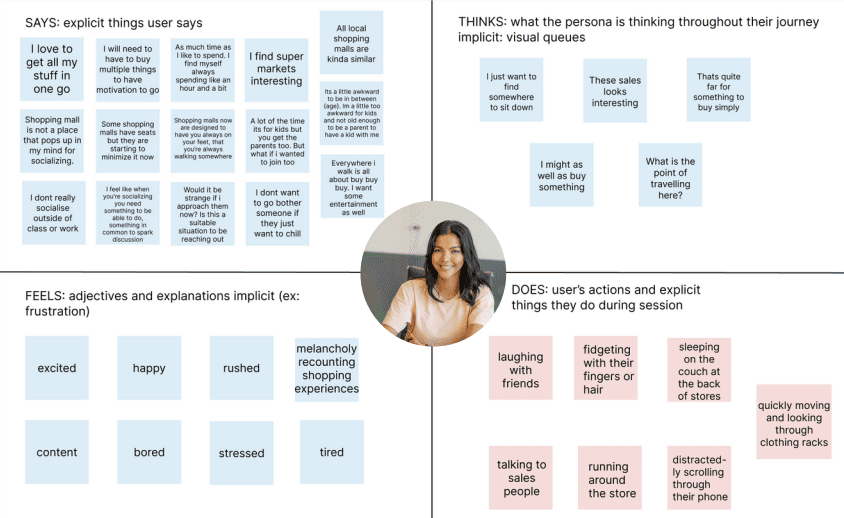
Empathy Mapping
An empathy map activity was completed to better understand our users and how they might feel, think and say whilst inhabiting the public space we are researching.
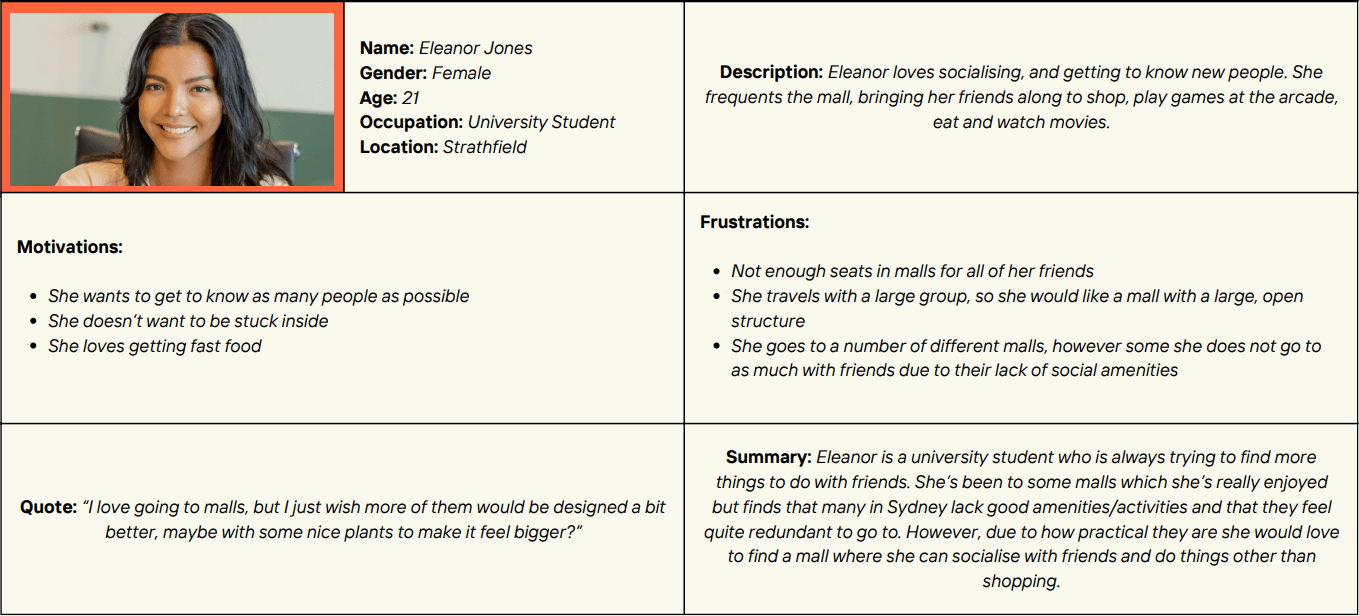
Persona
We then created a student consumer persona who frequents visiting shopping centre.
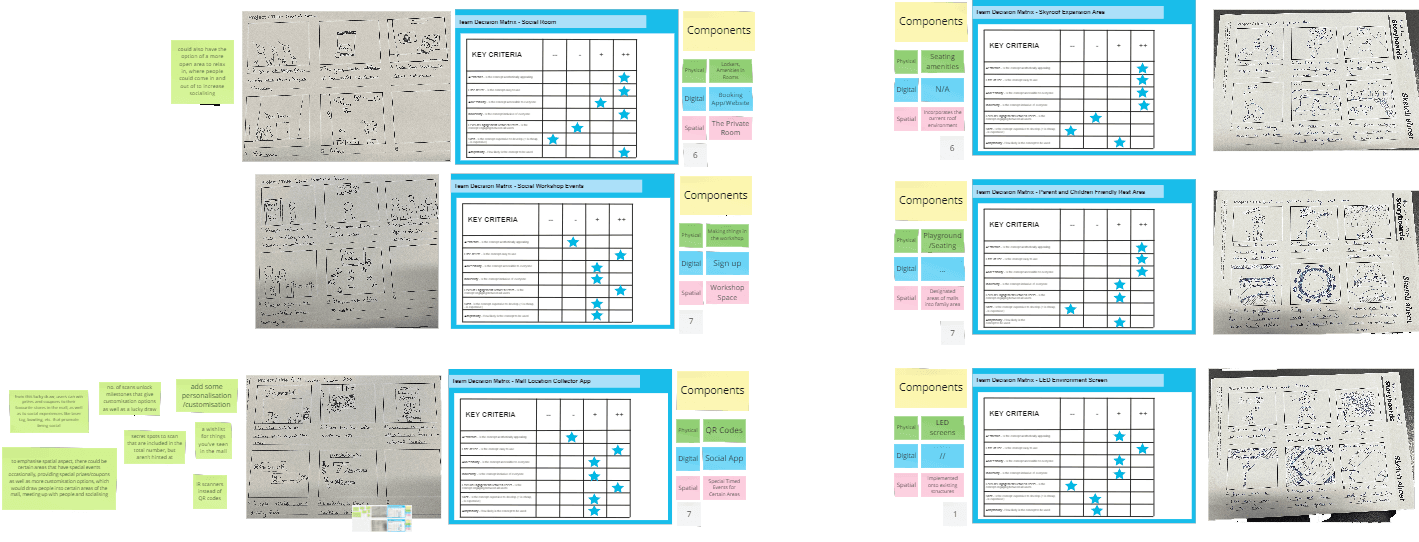
Ideation & Testing
With pain points identified, each member generated ideas using rapid ideation exercise. In total 7 designs were created and evaluated against a team decision matrix with set criteria and relevancy within physical, digital and spatial properties. After several team discussion, the chosen idea was the mystery cart.
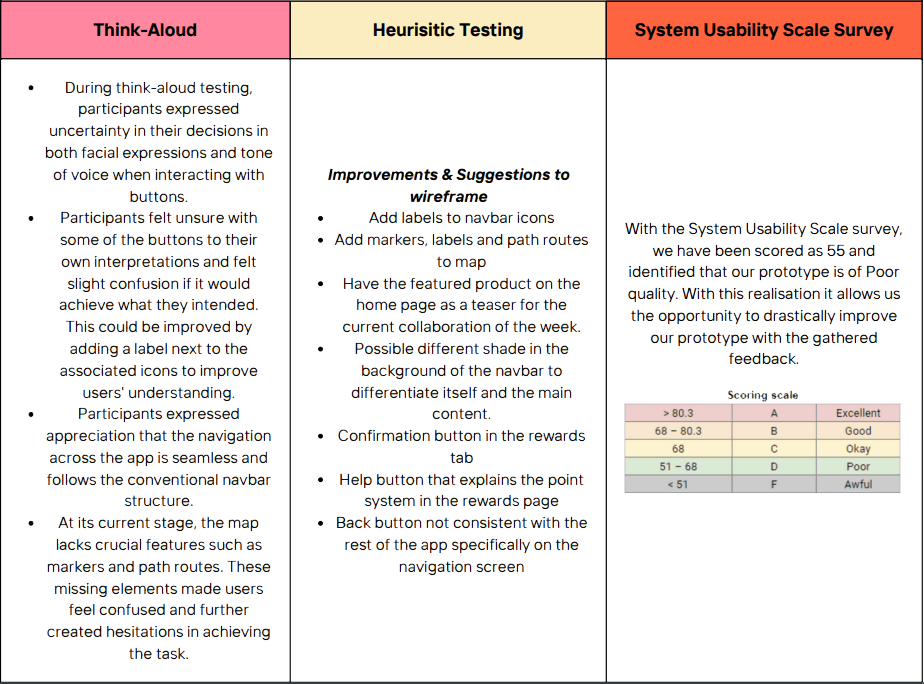
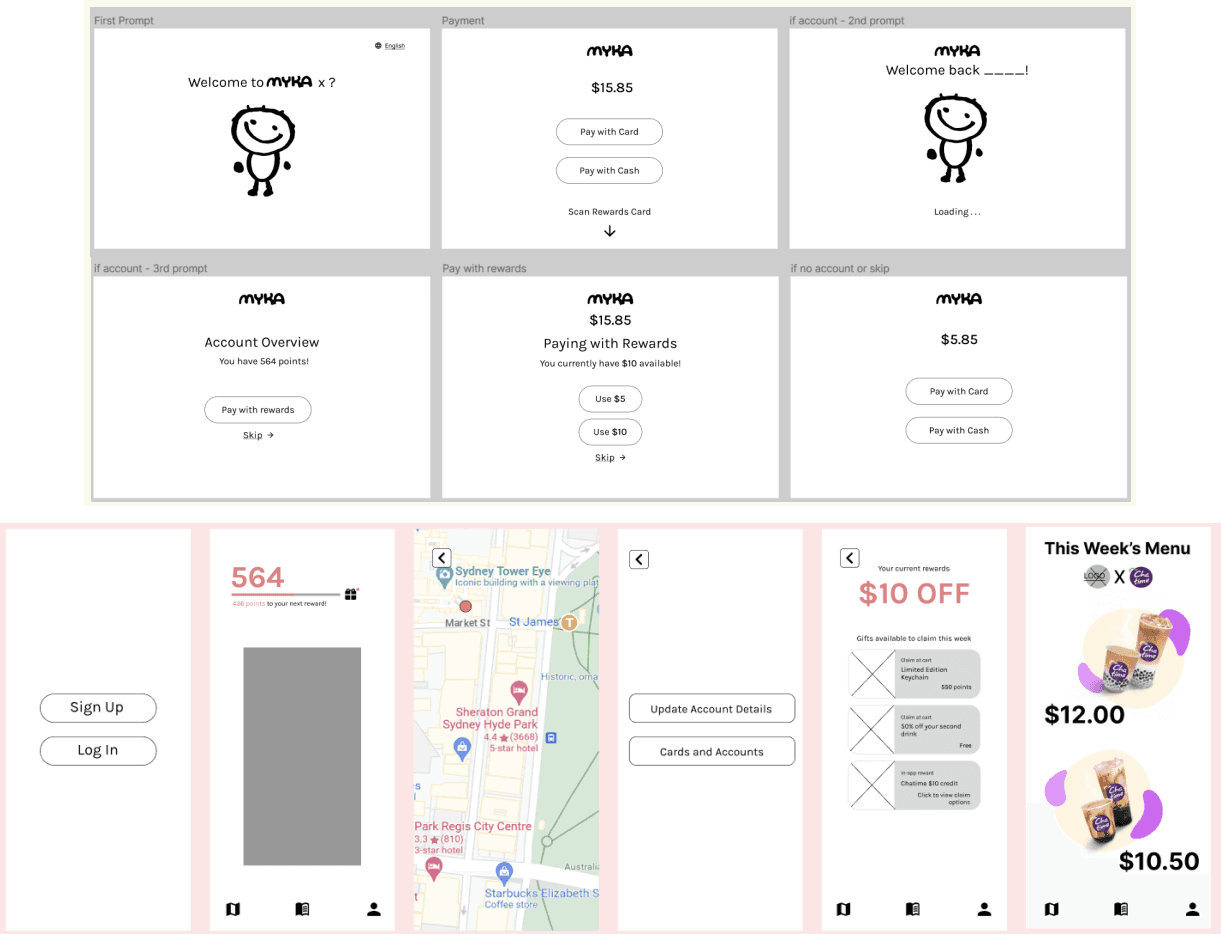
Low-fidelity wireframes were developed for the app component of the solution and user tested with Think-Aloud user testing protocol, followed by Heuristic Evaluation and finished by a System Usability Scale (SUS) survey.
Our low-fidelity testing demonstrated that our overall design needed to be more visually clear and labelled since general feedback felt confused on the navigational layout and made users rely on their own self-interpretations which went against our ideas of being able to implement into their already existing process instead of challenging and complicating it.
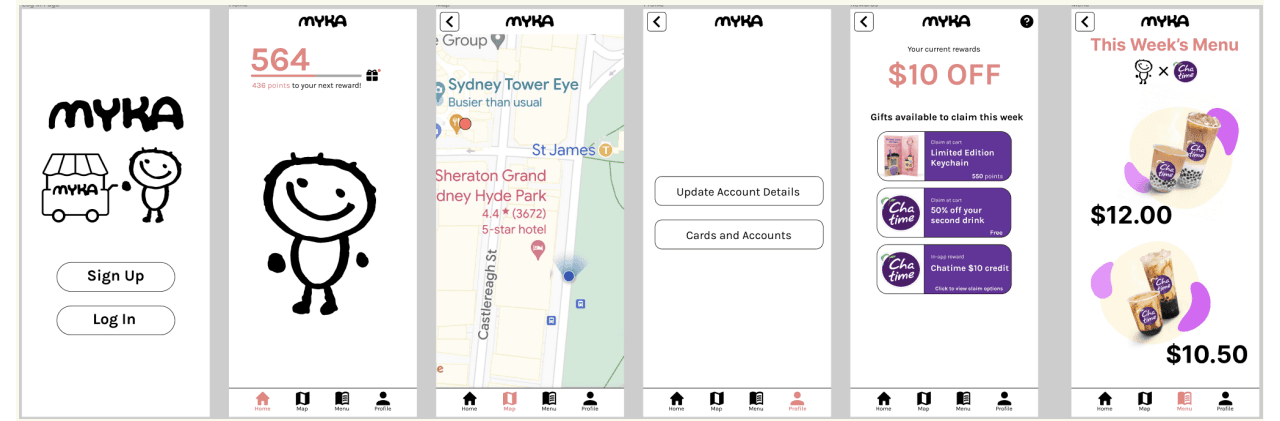
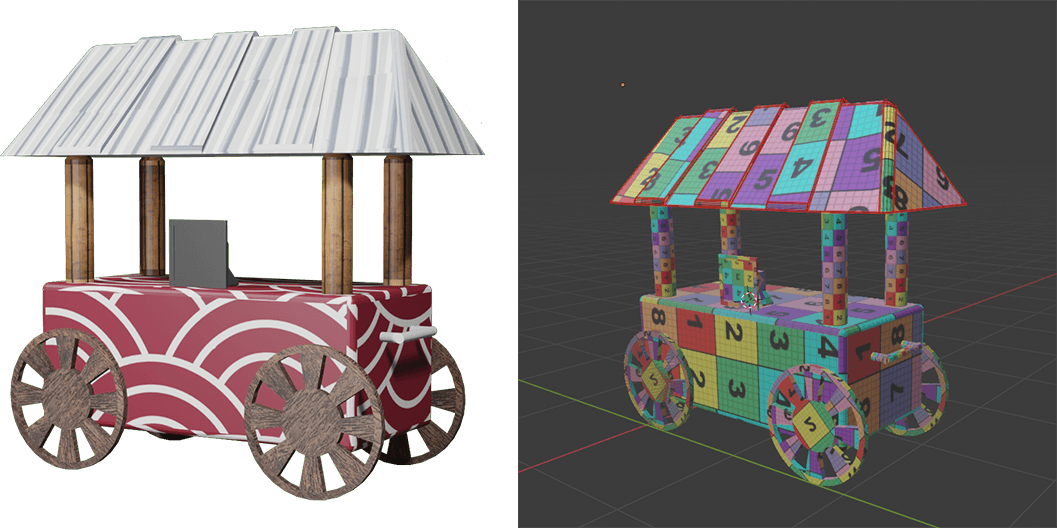
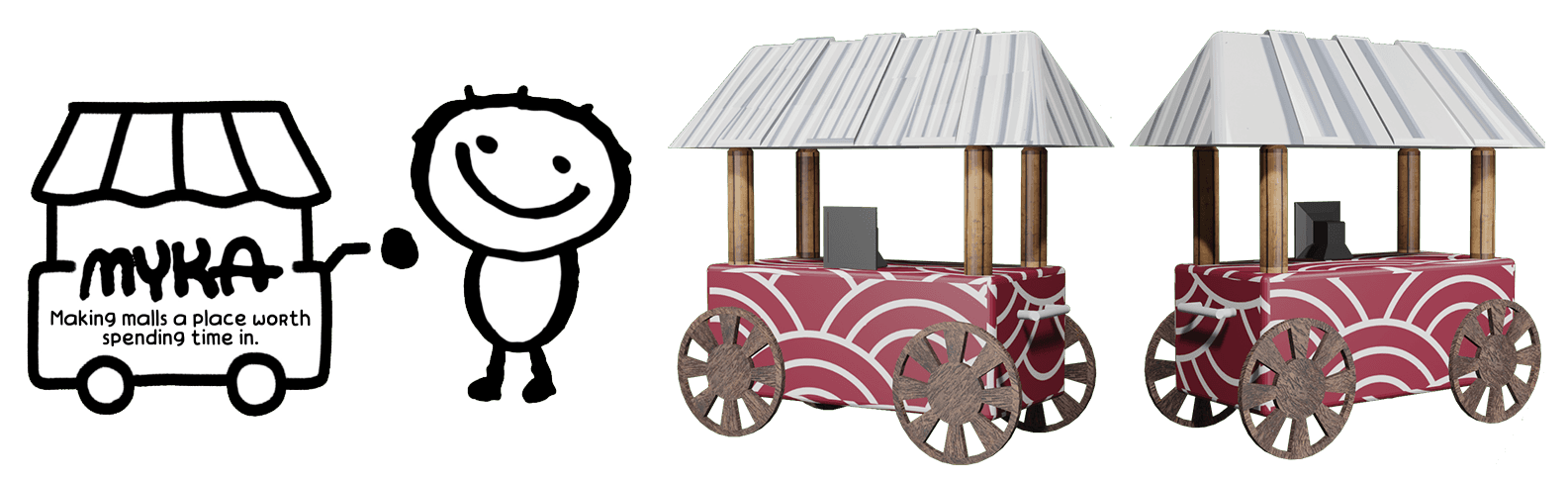
By mid-fidelity prototype, our design felt more appropriate and confident to be used by our target audience. However, we felt lacking in what we could physically demonstrate in the physical aspect of the solution as building a cart was not feasible or within budget for us university students. The team agreed that proceeding further would not yield more data if one were to be constructed and that 3D models and illustrations are sufficient and self explanatory to our solution.
Low-Fidelity Prototype
Mid-Fidelity Prototype
3D Model
Final Solution
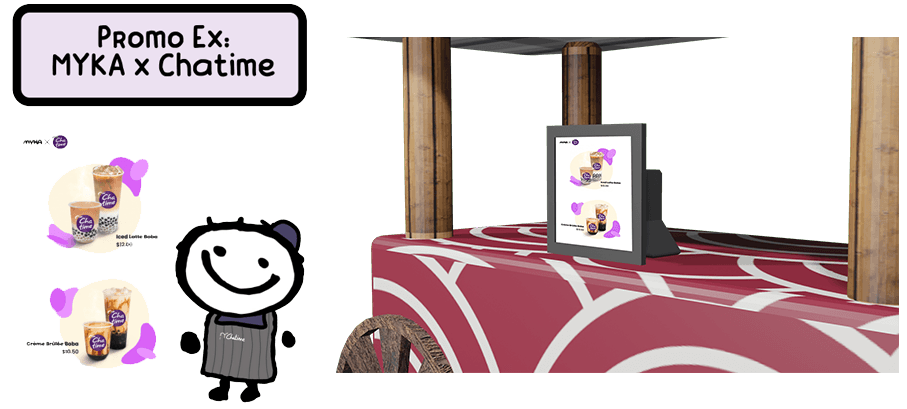
MYKA, a mystery cart travelling from mall to mall bringing a different collaboration each week. Users can find the cart's location either online via our social media page, or by going to their mall and searching themselves. Once they find the cart, users can check the digital menu to see what collaboration is on that day and what is being offered. Users can then purchase promoted items or check the app for any available rewards to redeem at the counter.
What physical, spatial and digital elements does MYKA explore?
Physical: An everchanging cart that is always accompanied by 'MYKA' our mascot, whose attire changes to fit whichever collaboration is active.
Spatial: MYKA carts can be found around various locations of different malls, such as in outside social areas, in front of various stores inside, and, if given sufficient space, food courts as well.
Digital: MYKA rewards app will accompany our users across different malls and collaboration, always there to reward them for their curiosity and exploration.
Although our solution is yet to be developed in a physical form, we plan for the final version of MYKA to include the following:
An employee that users can interact with to order.
A digital menu that changes depending on the contents of the cart for that day.
A minimalistic aesthetic that can easily change to meld with a brand's identity in a seamless way.
A supplementary app that consumers can use to track rewards point and where the cart might appear next.
A branding with a rudimentary art-style to appeal to a wide demographic, fostering a casual, and more personal identity which, provides the opportunity to create a similar community.

Reflections
MYKA was one of the first project where I was involved in the front-to-end process that involved using 3D modelling. Being in this position provided me a better understanding of the scope of being a designer and how to put all the learned design theories into practice. It would of been interesting to see a physical manifestation of MYKA but as university students our budget limitation led us down haha.
MYKA also provided me my first opportunity to be lead in managing and facilitating the user testing process. This was stressful at first but offered me with crucial experience in how to organise and communicate ideas to users and understanding their wants and needs too. I truly realised that conducting and managing user research is a strenuous task but remains a crucial role for the overall design process. Without good user research, there cannot be a good solution! Conducting the interviews were interesting and personally quite wholesome to being able to delve deeper into an individual's life in relation to an idea but the process of setting up one still can be challenging given time restraints of both parties.
At the end of all this, I am blessed to be working with such an amazing team. There were some areas in the prototyping phase which I have not encounter before but fortunately my team were experienced with it and taught me as well as showed some tricks that will be handful in the future. I was able to show them how 3D modelling goes as them too were inexperienced with it. Developing MYKA has improved my overall skillset as a designer and my confidence as a designer.