Climate Crusaders
"An augmented reality (AR) solution aimed to transform climate anxiety into climate action"
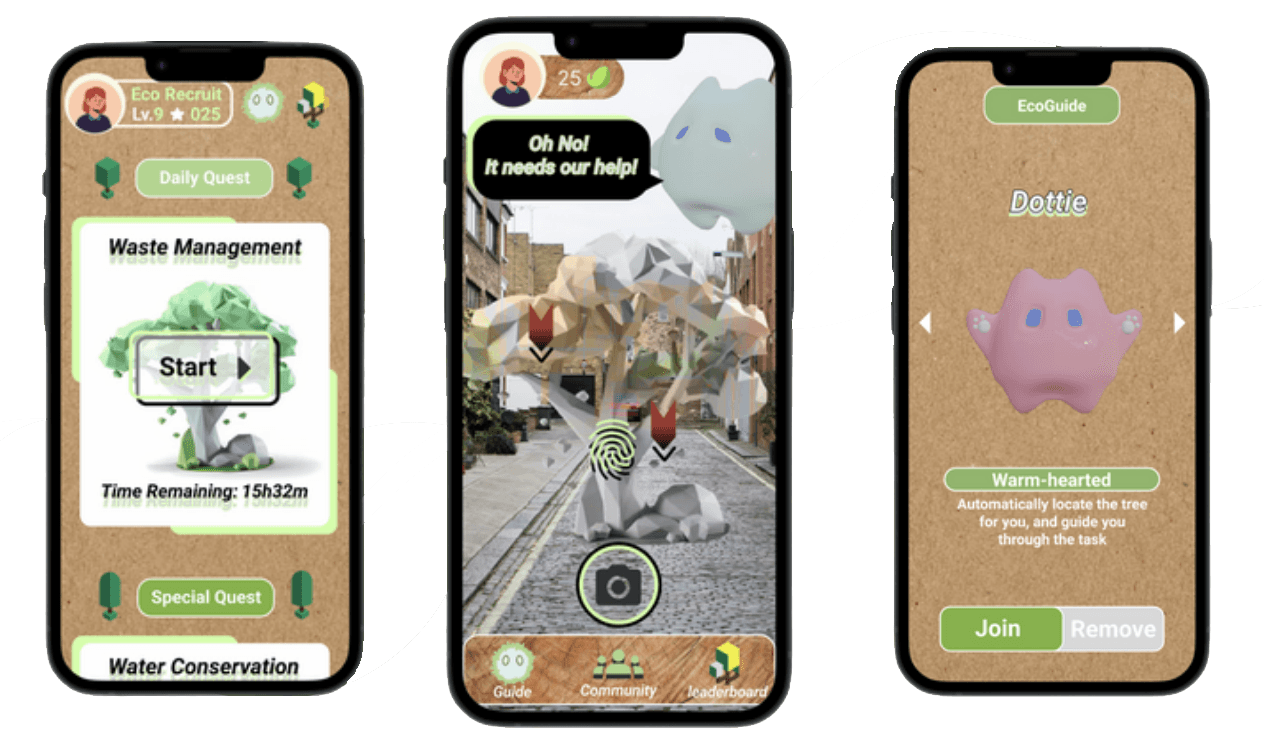
An augmented reality game called, “Climate Crusaders”, designed to challenge players to pursue eco-friendly actions in the real world and gradually realize that eco-friendly and sustainable practices are easy to incorporate into daily life as a way to reduce the impacts of climate change.
Type
UX Case Study
Structure
Team of 3
Duration
August - November 2023 (3 Months)
Role
UX Researcher, Lead User Testing, Lead Developer (AR/VR), Visual Designer and 3D Modeller
Tools
Figma, Canva, Miro, Unity
Subject
DECO3200 Interactive Product Design Studio @ USYD
Outline
Climate action is essential to mitigate the adverse effects of climate change that are already disrupting the planet’s ecosystem, national economies, and the quality of life among people (United Nations, n.d.). However, the key players in the fight against climate change are currently plagued by anxiety about their future. This recent phenomenon has been coined as “climate anxiety” which refers to the fear that individuals experience due to the imposing threats of climate change on the planet (Reyes et al., 2023). Despite experiencing climate anxiety, Generation Z is not proactive in combating the impacts of climate change. The generation does not view their behaviors and actions as playing a part in fighting climate change and thus, do not take the initiative to reduce their emissions (World Economic Forum, 2022).
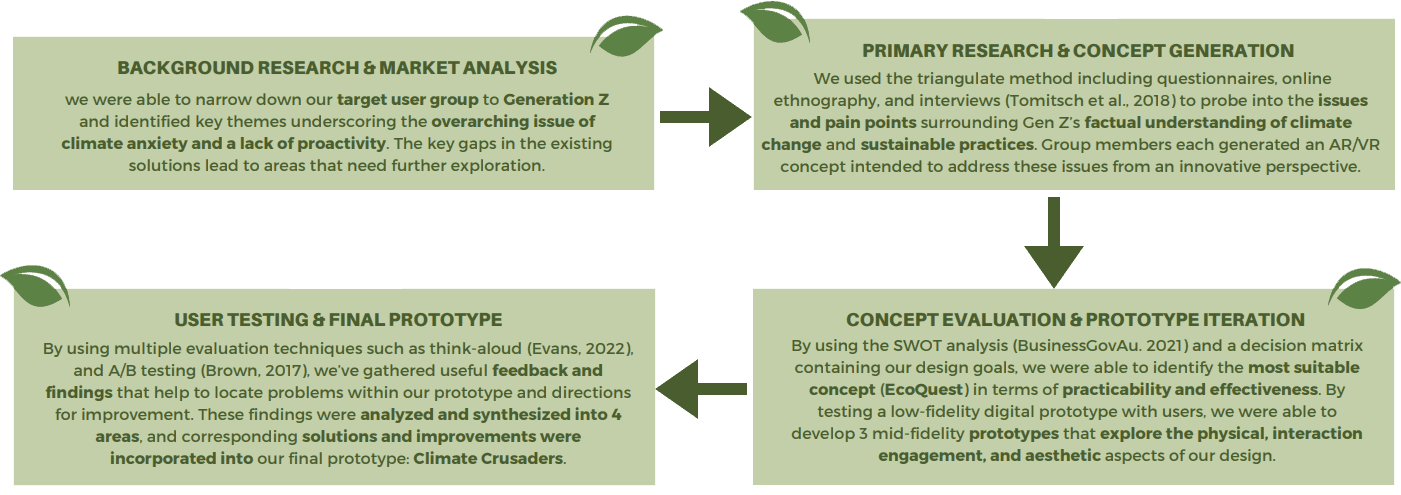
Design Process
Problem Statement
How could a virtual or augmented reality experience inform Generation Z how to be proactive in the fight against climate change and its impacts, to aid their climate anxiety?
Initial Research
The research methods we adopted included an in-depth background research analysis of the market and competitor space, questionnaire, interviews and an online ethnography. Through this we hope to answer:

Findings from Literature
To ground our research, a literature review was conducted to pinpoint four key themes underscoring the overarching issue of climate anxiety amongst Generation Z:
Social media is positioning Generation Z to perceive climate from the lens of worry and fear.
The continuous expansive nature of social media creates an exposure of information that portrays climate change as imminent environmental disaster, amplifying their feelings of hopelessness and fear.
Generation Z do not believe their governments are making meaningful policy changes.
A study that surveyed 16- to 25-year-olds, found 65% of its respondents agreed with the statement that governments are failing young people in responding to climate change (Thompson, 2021).
Generation Z will experience the more severe impacts of climate change over their lifetime which contributes to their climate anxiety.
The long-term implication of climate change greatly contributes to the younger generation’s anxiety about their future and the future of their planet (Petrescu-Mag, 2023).
Despite their climate anxiety, Generation Z are not proactive in combating the impacts of climate changes.
Generation Z do not view their behaviours and actions as playing a part in fighting climate change and thus, do not take initiative to reduce their emissions (World Economic Forum, 2022). The younger generation evidently do not feel empowered to fight climate change and this may be due to not understanding the importance of individual actions within collective effort (Petrescu-Mag, 2023).
Market Analysis
Performing a market analysis allows us to better identify opportunities, risks and trends within our competitors. The solutions from competitors were categorised as "raising awareness via campaigns, protest or movements", "stimulation of experiences" and "assistive tools via applications".
Key Themes of Market Analysis:
Small team size amongst solutions
Board of directors for these solution’s organizations only consists of several professionals and not for profit organizers are partially dependent on volunteers or passionate individuals. This dependency can potentially lead to dysfunction of the organization.
Mitigation of current damages and adaptation for future changes
Majority of smaller organizations and movements are concentrated on short term benefits and are effective at identification and mitigating occurred damages. However, they will need to also focus on the bigger image and engage in larger issues such as corporations exacerbating the problem and inadequate response from the government.
Key Gaps of Market Analysis:
Current solutions raise awareness of climate issues but lack in providing and developing a feasible long term solution to counter the problem.
Currently there isn't a solution that addresses all problems of climate change, many only focus on a single aspect. Climate change is not just one problem and we agree this is an extremely complicated problem that requires more than a generalized tool that can be applied to all situations and problems.
Summary of Market Analysis
By conducting both background research and a market analysis, we had developed robust general knowledge of the design space that would guide future primary research:
There is a need to enhance people’s factual understanding of climate change and its ongoing impact on our ecosystem.
There is to demonstrate that our generation’s combined contribution and efforts can make a difference.
Primary Research
Questionnaire
We created an online questionnaire to gain insights into Generation Z’s self reported behaviours, attitudes or perspectives in relation to climate anxiety and action. The data will assist with quantifying user awareness and anxiety towards climate change and understanding how users feel about climate change and its impact and what they are currently trying to negate them.
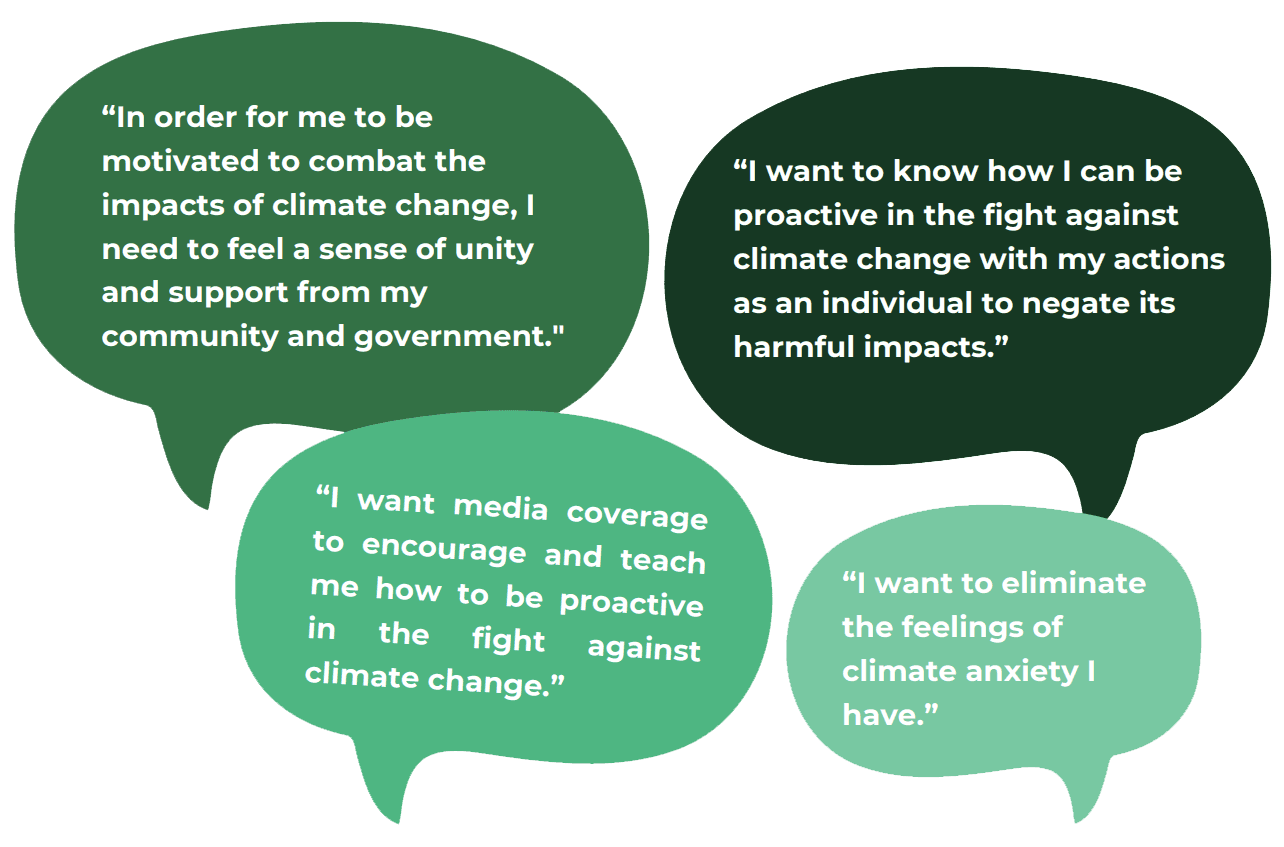
To underpin user insights from the responses gathered from the online questionnaire, an affinity diagram was created. Four key findings were highlighted in the process of creating the affinity diagram:
Online Ethnography
Delving into the platforms of popular social media discussion sites such as Youtube, Twitter, Reddit and Facebook. After analysis of multitude comments and discussion posts, we were able to identify five common themes across users:
I want malls to be welcoming
Shopping malls should be encouraging more aspects for socialising
Individuals that are aware of climate change and the conditions of climate anxiety but not necessarily experience it. These users are not knowledgeable on how to manage the symptoms or felt lost in how to approach climate change.
I want the mall to be aesthetically appealing
Individuals who experience climate anxiety and are severely worried about the future generations or possibilities within the future.
I want to have more relaxation and entertainment options
Individuals who personally contribute to improving the state of climate change but show frustration that there is no collective effort or communal behavioural changes to promote better climate change initiatives.
I want a greater focus on current mall amenities
Individuals who show hatred and anger towards the older generation for not properly contributing to managing climate change despite having considerable time to prepare
Ideation
Our team ideated three concepts that instrument either augmented reality or virtual reality technology in a way to help inform Generation Z how to be proactive in the fight against climate change. Each concept possess a sense of novelty to address the problem statement. However, to narrow down to the most suitable concept that will be expanded upon in the prototyping stage, we measured the concepts against SWOT analysis and decision matrixes:

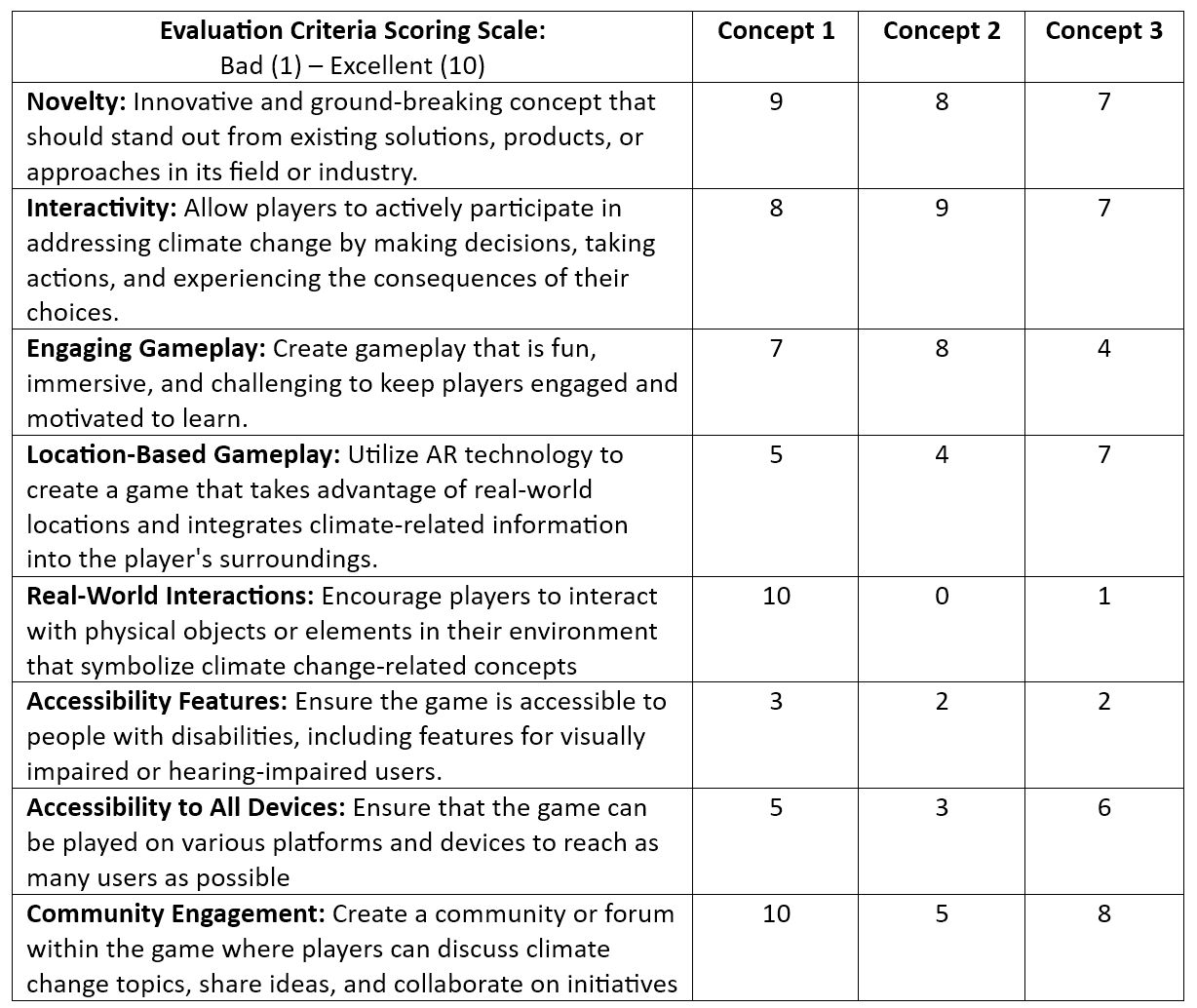
Concept 1: EcoQuest
All of Team Decision Matrixes
In-Depth Team Decision Matrixes
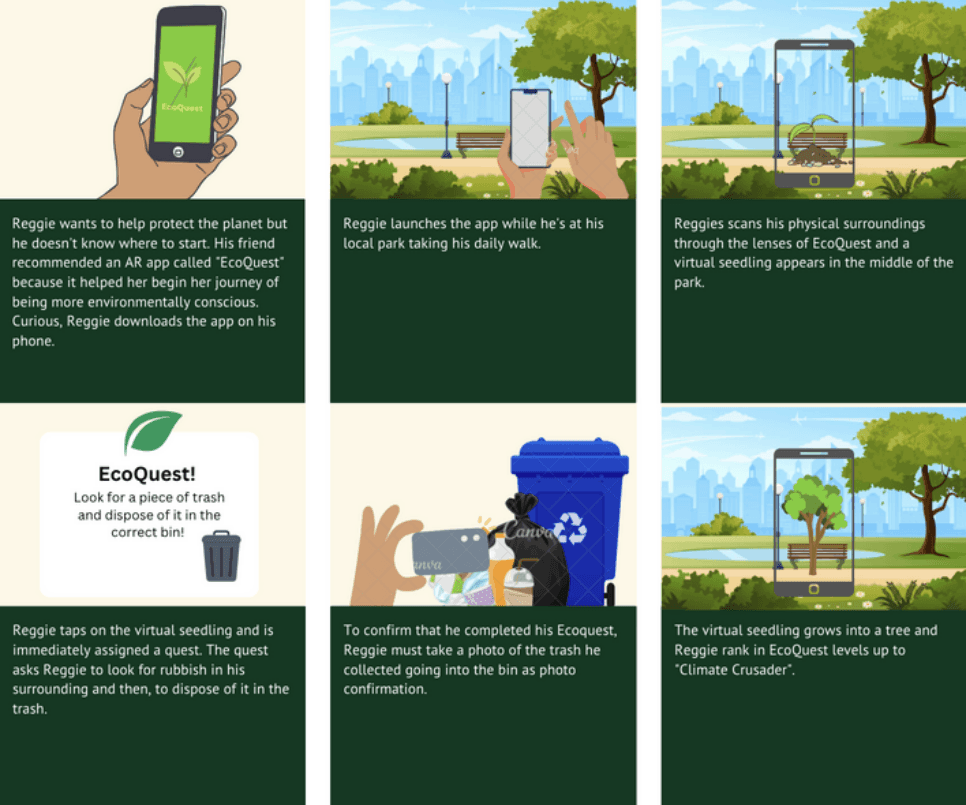
Ultimately, based on our evaluation methods we collectively decided to elect Concept 1: EcoQuest as a concept to expand upon in our prototyping and development stage.
EcoQuest is an interactive mobile game that uses augmented reality to show players small, everyday actions can collectively make a significant difference in the fight against climate change. The ultimate goal of this game is to combine an immersive AR experience with real-world behavior to inspire players to adopt sustainable habits in their daily lives and foster a sense of responsibility for the environment.
Testing and Iterations
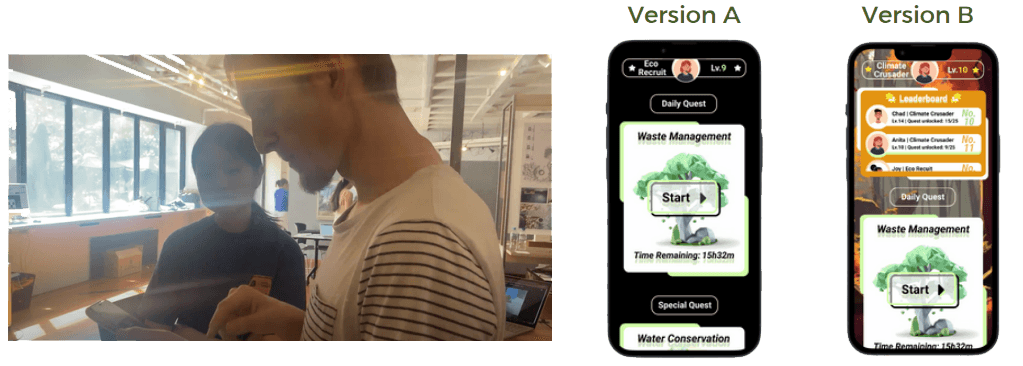
We tested the overall system of the app with low-fidelity wireframes on Figma. The low-fi wireframes were designed to test the usability of various features of the system. Our low-fidelity testing indicated that our idea needed more user engagement and attraction in visual design. Components like the photo capturing and sharing were highlighted as key issues which hindered user’s efficiency. With our think-aloud user testing protocol it guided us to a much more refined design that incorporates elements like interactable trees and leaderboards as well as profiles to encourage user motivations and satisfaction.
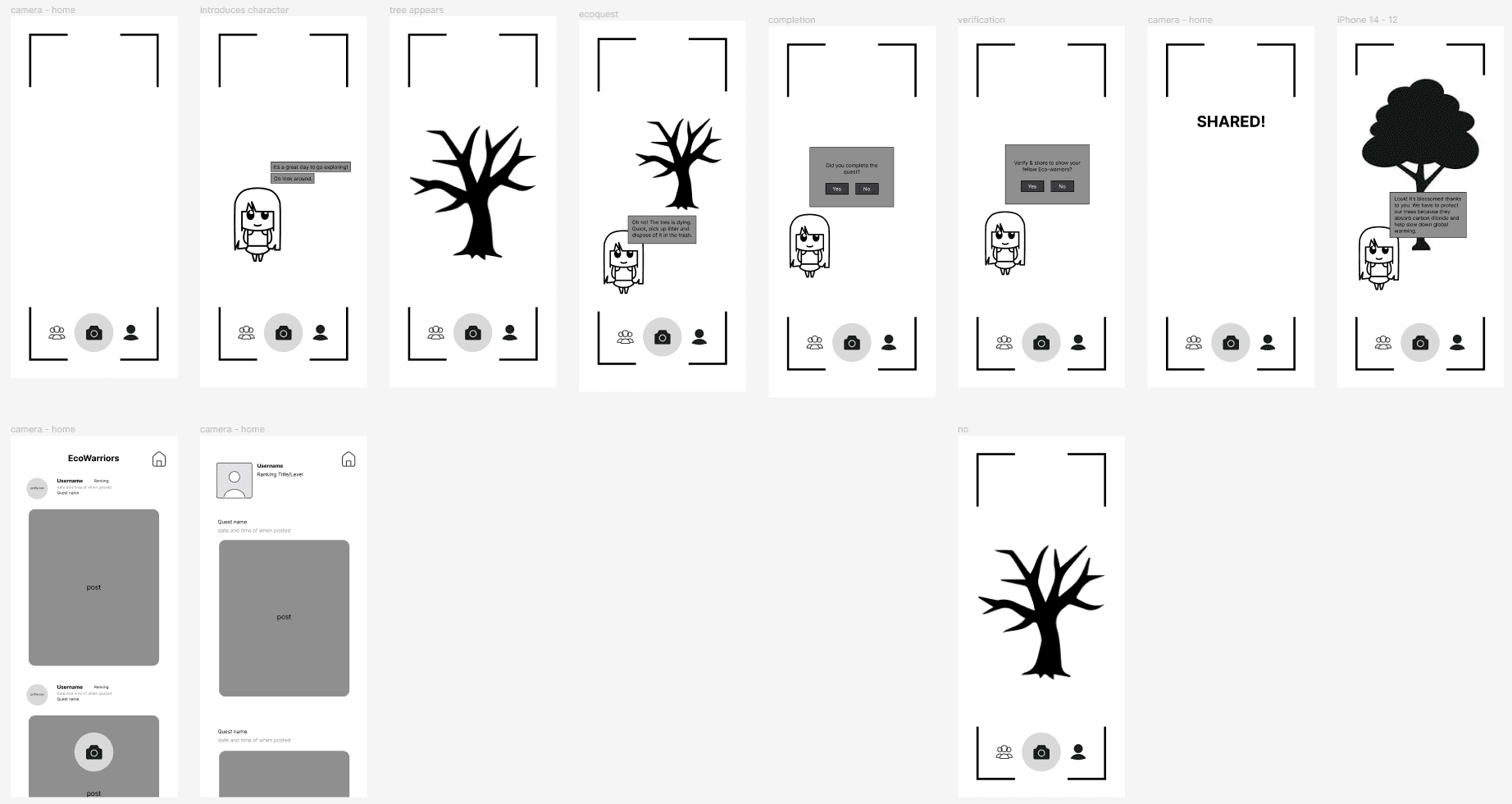
Low Fidelity Prototype
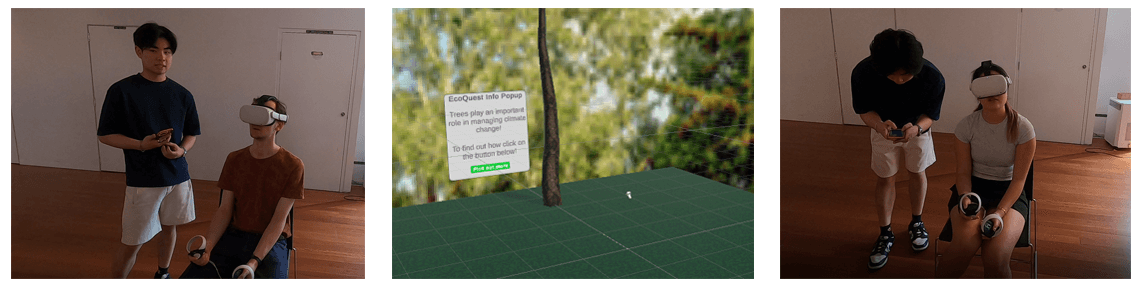
Mid-Fidelity VR Prototype
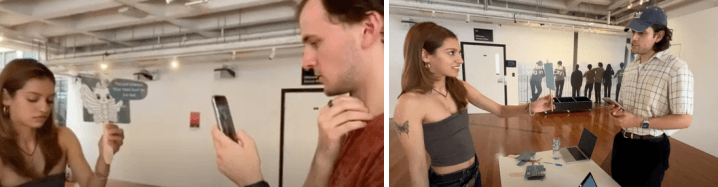
Mid-Fidelity Paper Prototype
Mid-Fidelity Digital Prototype
Our mid-fidelity testing and expert testing were set to test several other features and across different mediums. The VR prototype focused on the delivery of content and stimulates the real environment deployment aspects. The Paper Prototype further tested the user interfaces when a user completes a task. The digital prototype inquires more and examine whether the prototype is able to convey the concept and theme of our design in an intuitive and enjoyable way, while also being able to engage and motivate continuous and consistent usage. After collating our findings, our designs still severely lacked across five areas of design usability goals and illustrated that our design will still need further iterations before development of the high-fidelity.
Final Solution
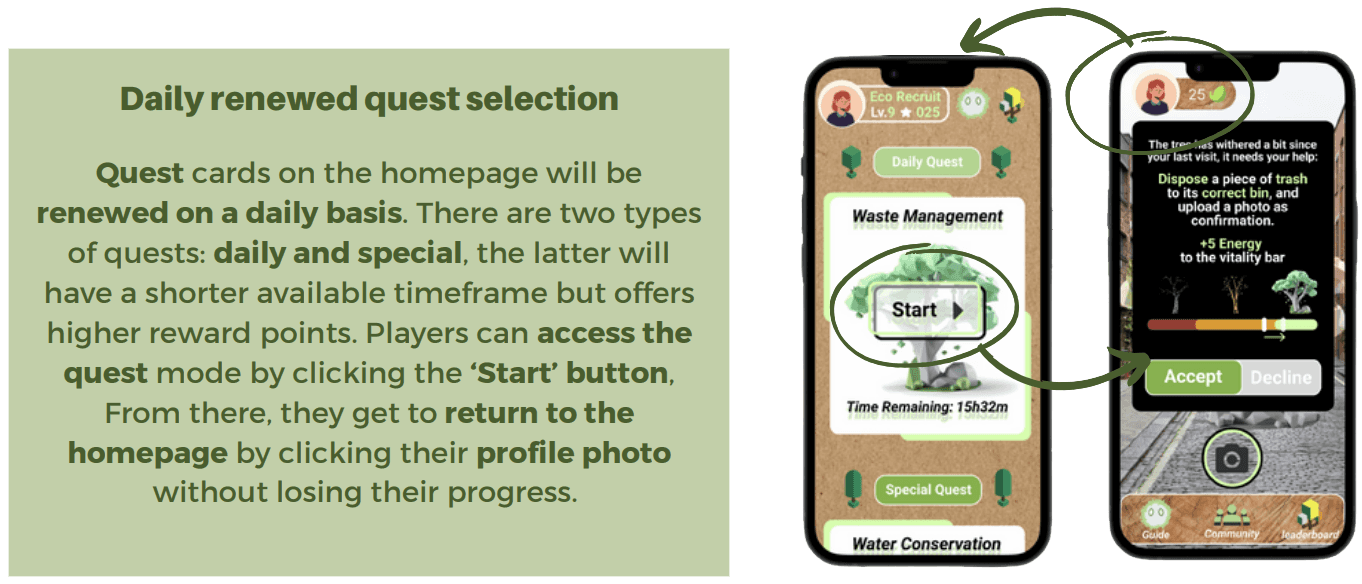
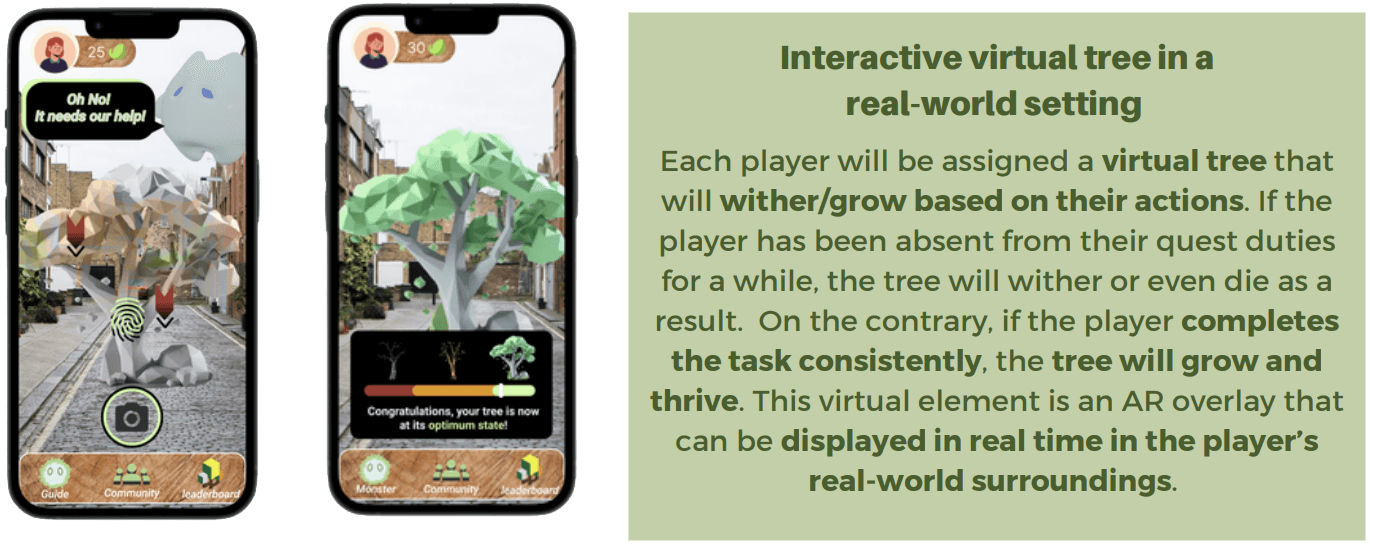
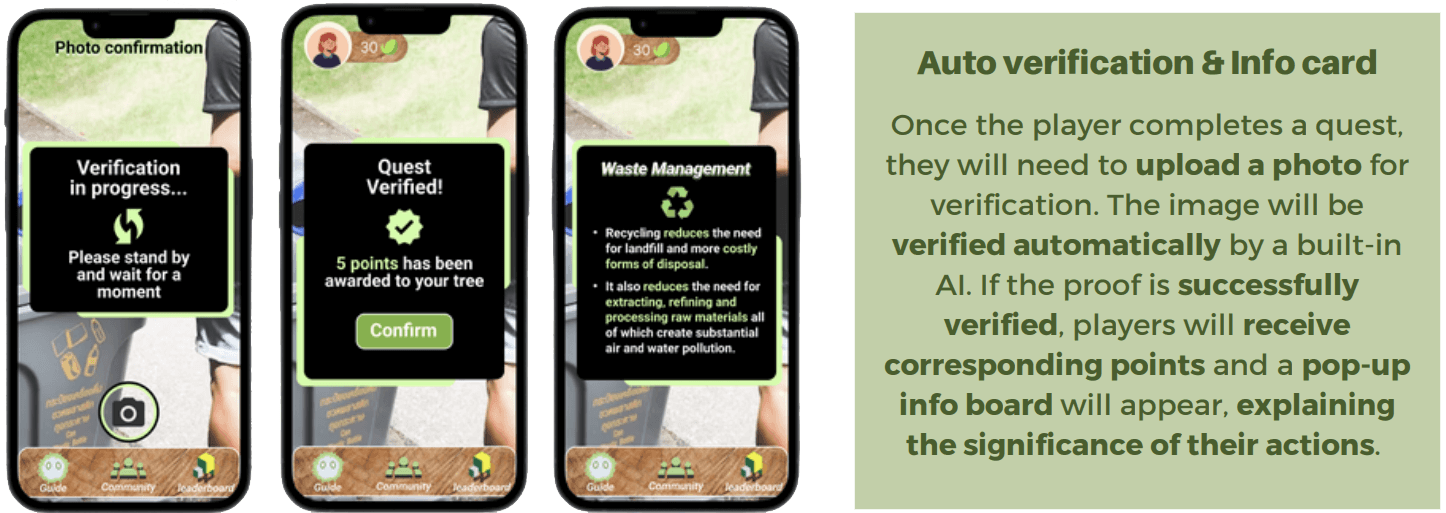
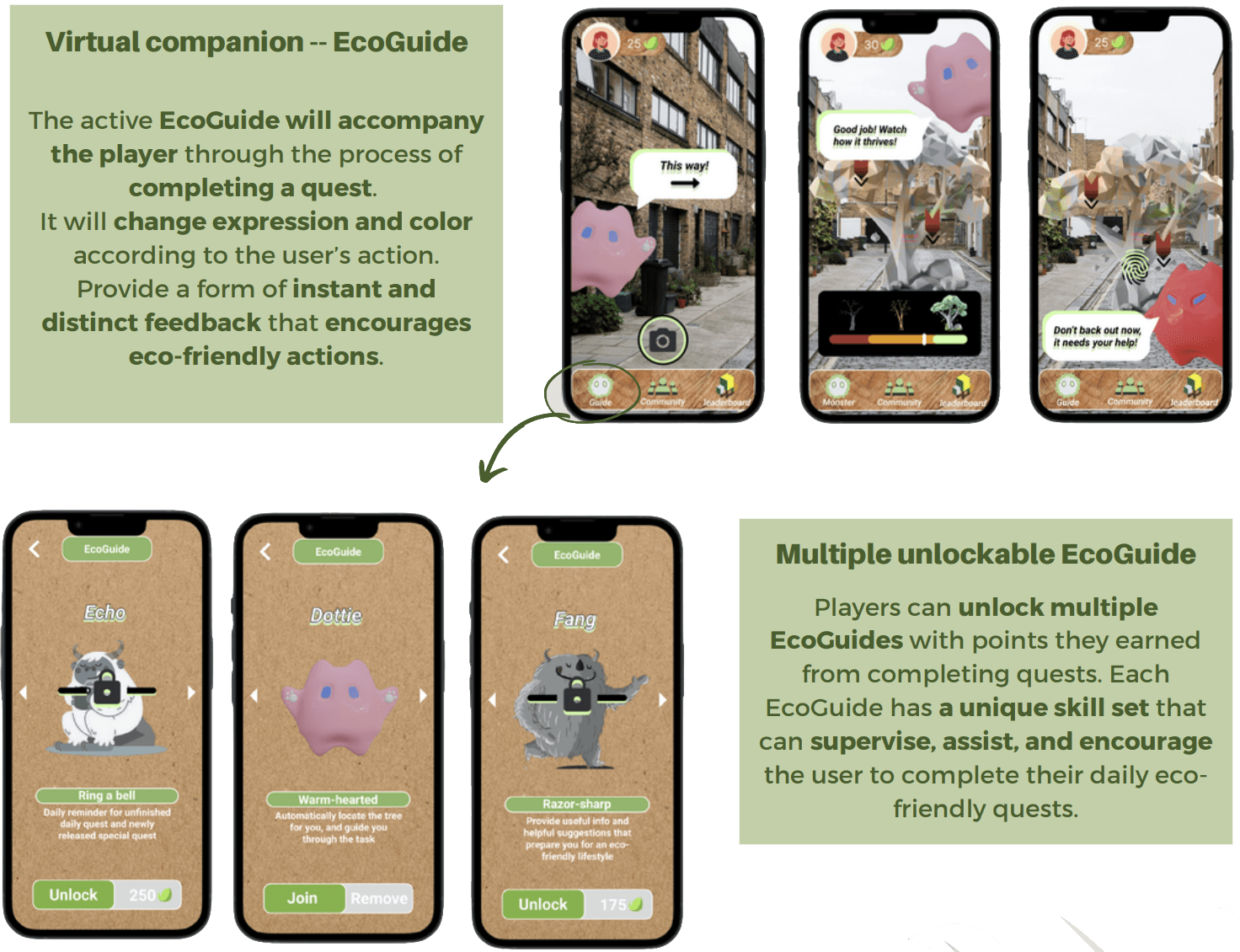
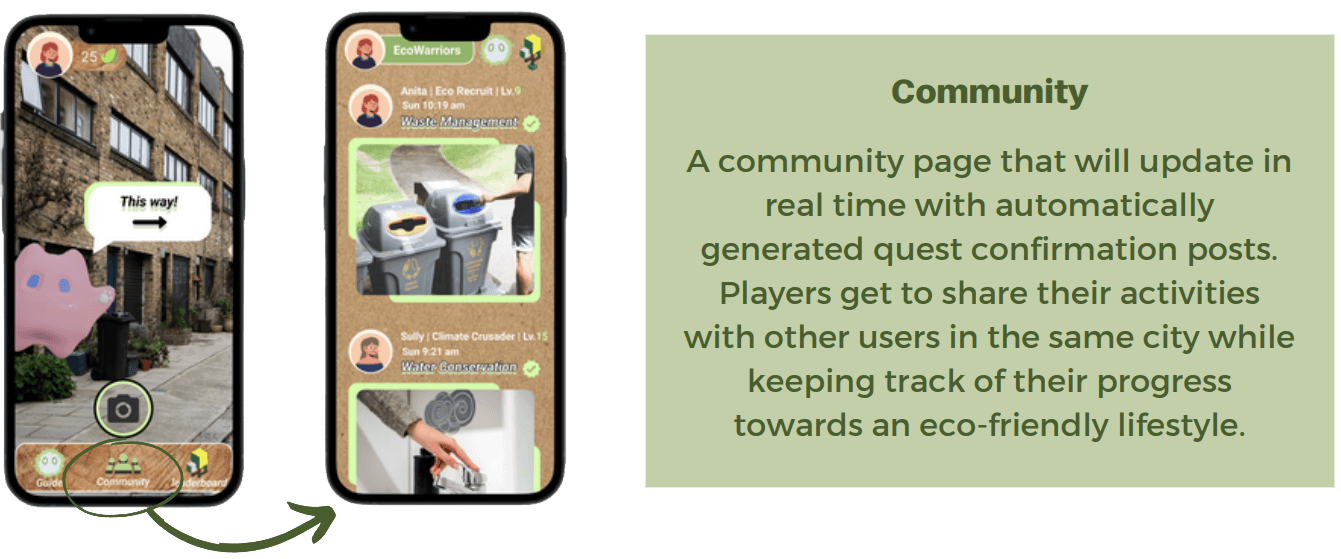
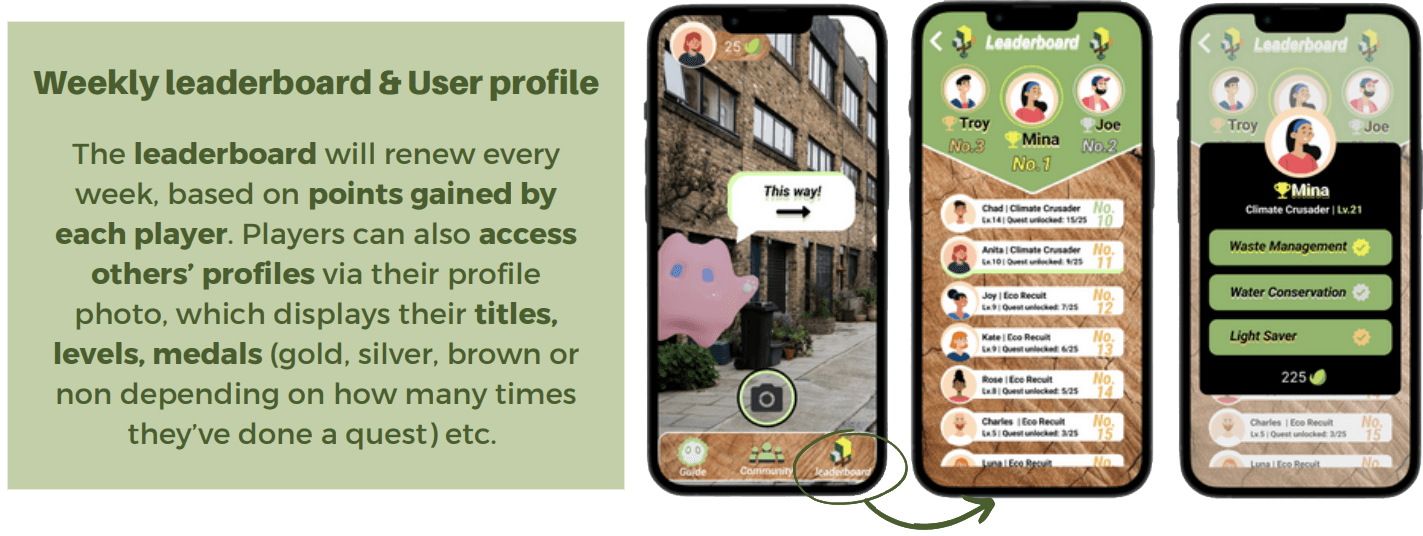
Climate Crusader core functionality:
Reflections
Climate Crusaders was the first project in an end-to-end process that involved the use of AR and VR. There were many learning curves, technical difficulties and overall challenges to overcome at every step of the design process. On top of these project obstacles, there was financial considerations that affected the feasibility of some aspects of the project.
However, working as team, it makes you realise that as designers it is a collaborative effort and emphasises that teamwork is important to work around these difficulties. Climate Crusaders has been one of the most challenging yet satisfying projects.